 Seawall
Accountability Partner: Let a Friend Hold the PIN
The person who installs a blocker on a Tuesday afternoon is calm, clear and certain. The person who meets it at one in the morning on Saturday is none of those things. They are the same person, and that is the whole problem.
The hot-cold gap
Behavioural economists call this the hot-cold empathy gap, a term from George Loewenstein's work: in a cold, calm state we systematically underestimate how differently we will think and act in a hot one. So we build defences the cold self would never breach, and the hot self dismantles them in twenty seconds. A blocker whose PIN you know is a lock with the key taped to the door.
Commitment devices
The classic answer is old. Odysseus wanted to hear the Sirens, so he had his crew tie him to the mast and ordered them to ignore him until they were past. Economists call this a commitment device: an action the cold self takes to bind the hot self. Research on self-imposed deadlines by Dan Ariely and Klaus Wertenbroch found that people will voluntarily bind themselves and that it helps, though not as much as a constraint set by someone else. Constraints work best when another person holds them.
That is the logic of an accountability partner. Not a supervisor, not a confessor. Someone who holds the key.
Why a PIN you never learn
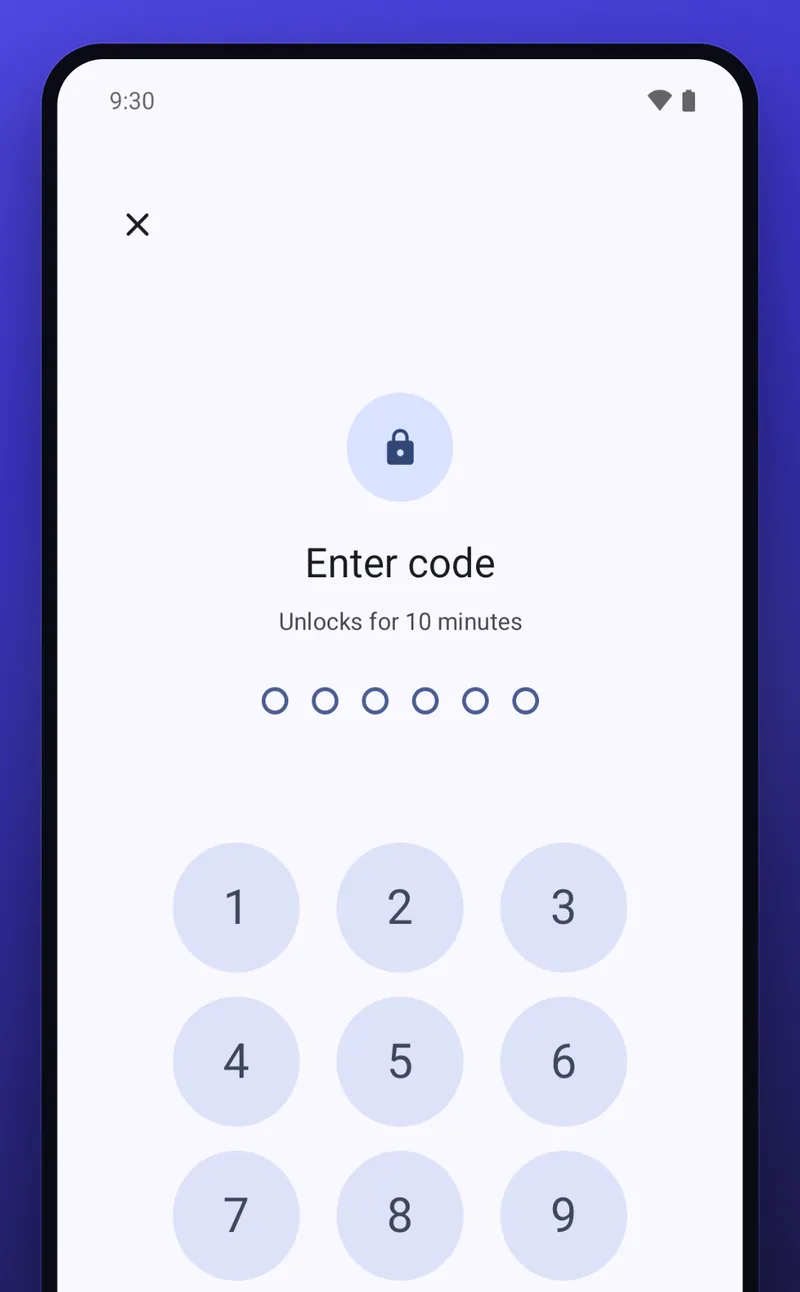
Seawall lets you set a PIN so that editing a block, removing one, uninstalling the app or turning protection off all ask for the code. The strongest version goes one step further: a friend types the code while you look away, so there is nothing for the hot self to remember. Unlocking for ten minutes now means calling someone. Most people find that they do not call, and that the urge passes while they are deciding whether to.
The safety valve
No one should be trapped by their own tool. Seawall has a 24-hour delayed release: without the code, you can request that protection turn off, and it does, one day later. You can cancel the request at any time. The delay is long enough that no urge survives it and short enough that a real need is met. Because Seawall has no internet access, it will not tell your partner when you request a release. Telling them is your job, and that is on purpose.
Choosing a partner
- Someone you would be embarrassed to lie to, but not afraid of.
- Someone who answers messages, including late ones.
- Someone whose reaction to a slip will be a question, not a sermon.
- Not usually someone in the same struggle, unless the arrangement is mutual and explicit.
- A spouse can work, but only if the topic is already open between you. Otherwise a friend, a sibling, a mentor, a sponsor, a rabbi or pastor, or a therapist.
What to say
Keep it short and specific. "I'm using an app to block some sites and apps at night. I'd like you to type the PIN so I don't know it. If I ask you for it, ask me why, and if it's a real reason, give it to me. Once a week I'll tell you how it went." That is the whole contract.
When you slip
You will, at some point, and the slip is not the failure. Hiding it is. Tell your partner within a day, say what happened before the urge, and adjust one thing: an earlier schedule, a new keyword, a different evening routine. Then set the block again. Every honest report makes the next one easier and the next urge weaker.
Set it up in two minutes
- Install Seawall and choose what to block.
- Tap Set code, hand the phone to your partner, look away.
- Ask them to keep the code somewhere you cannot reach.
- Agree on a weekly check-in.
The cold self has done its work. From now on it has an ally who is awake when the hot self is not.